22 Aug 2026
Tracing Connections Between Mobile Accessibility Features and Responsible Play Tools in Digital Slot Environments
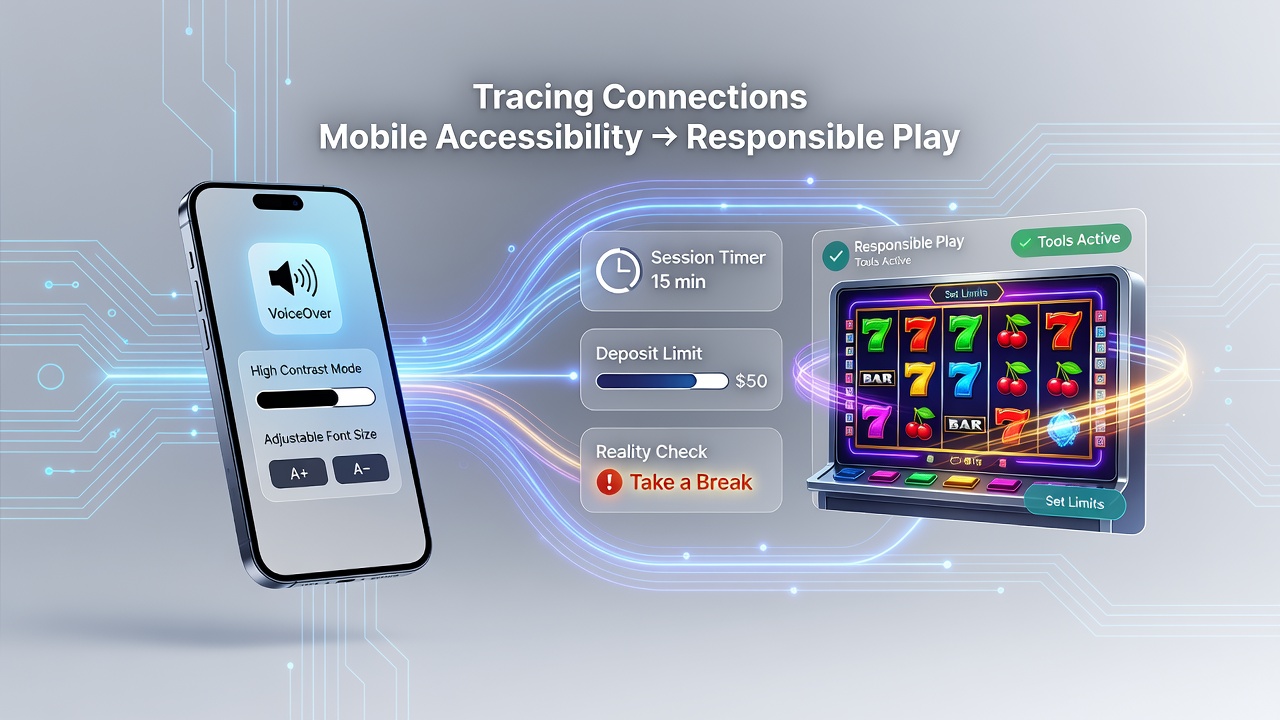
Digital slot environments on mobile devices have evolved to incorporate accessibility features that support users with visual, auditory, or motor impairments while also aligning with responsible play mechanisms such as session reminders, deposit caps, and reality checks; these overlaps create pathways where screen readers announce limit notifications and voice commands allow players to adjust time-based controls without visual navigation.
Researchers at institutions across multiple regions have documented how mobile operating systems provide built-in tools like VoiceOver on iOS and TalkBack on Android that read aloud game interfaces, and these same systems now interface with casino applications to vocalize responsible play prompts issued by operators; data from industry reports indicate that such integrations reduce barriers for users who rely on audio feedback to monitor their activity in real time.
Mobile Accessibility Standards in Gaming Applications
Accessibility guidelines from organizations including the World Wide Web Consortium require that interactive elements in slot games support keyboard equivalents and high-contrast modes, yet operators extend these requirements further by embedding them into features that promote controlled engagement; for instance, adjustable text sizes adn color filters originally designed for readability now appear alongside session timers that users can query through voice input.
Studies conducted by academic teams in Australia and Canada reveal that approximately 15 percent of mobile slot users activate accessibility options during play, and among that group a notable portion also engages with built-in responsible play dashboards; this correlation emerges because the same gesture-based shortcuts that enable swipe navigation for motor-impaired users can trigger pop-up summaries of current spending limits without requiring precise tapping on small icons.
Responsible Play Mechanisms on Mobile Platforms
Operators deploy tools such as mandatory cool-down periods, loss-limit alerts, and self-exclusion toggles that activate through account settings accessible via mobile browsers or dedicated apps; regulatory frameworks in the European Union and select North American jurisdictions mandate that these tools remain available at all times, and developers have begun routing them through the same accessibility layers that handle screen magnification and captioning for video elements in slot animations.
Figures released by the National Council on Problem Gambling show that mobile-specific responsible play usage increased by 22 percent between 2023 and 2025, coinciding with wider adoption of voice-controlled interfaces; those who studied this trend note that players using screen readers receive spoken confirmations when they set a daily deposit ceiling, thereby reinforcing awareness without additional visual prompts.
Integration Patterns Observed in August 2026
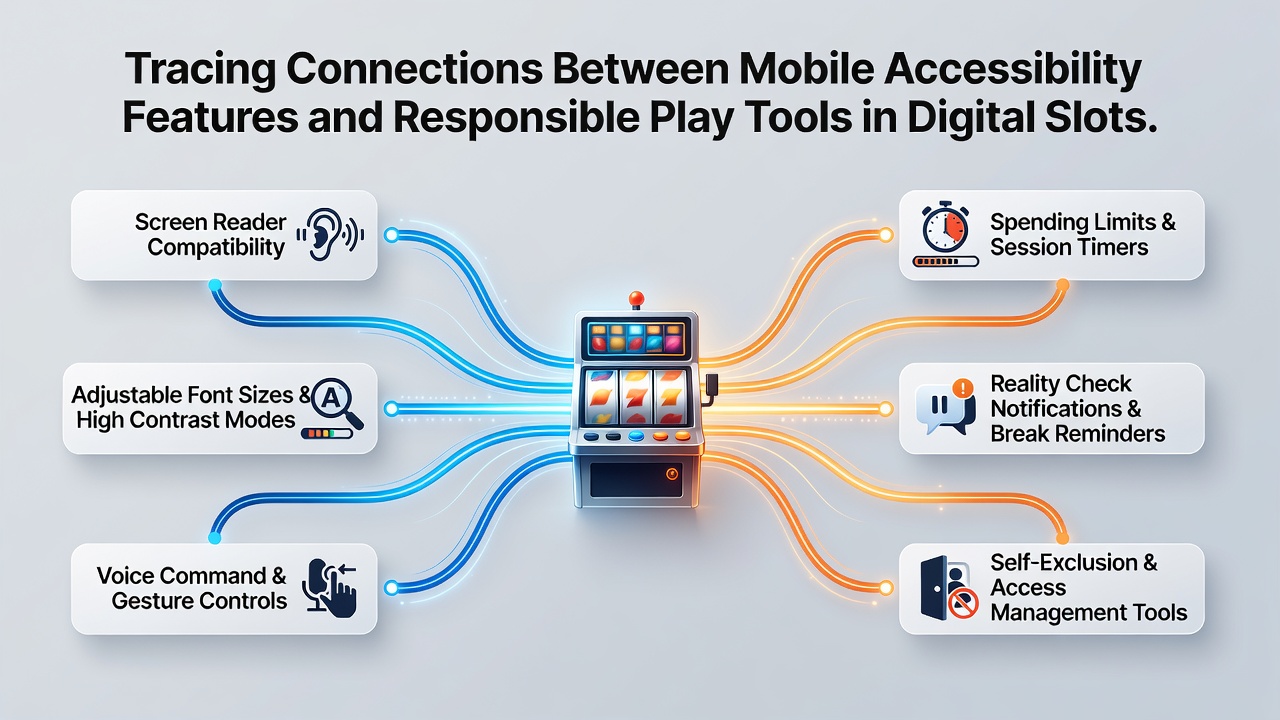
By August 2026 several major platforms updated their mobile slot titles to route accessibility APIs directly into responsible play modules, allowing users to receive haptic feedback when approaching a preset time limit and to issue voice commands that pause gameplay immediately; this development follows earlier pilots where operators tested compatibility between TalkBack gestures and limit-setting menus, resulting in smoother transitions for users who combine both feature sets.
Evidence from Canadian regulatory summaries indicates that jurisdictions requiring accessibility compliance also report higher activation rates of voluntary spending caps, suggesting that the technical overlap encourages broader adoption; developers achieve this by mapping standard accessibility events, such as focus changes announced by screen readers, to trigger the same backend checks used for reality-check notifications.
Technical Pathways Linking the Two Feature Sets
Application programming interfaces supplied by device manufacturers permit third-party slot applications to query accessibility status and adjust interface responses accordingly, so a player who has enabled high-contrast mode automatically receives responsible play banners in matching visual styles; similarly, text-to-speech engines can vocalize the exact wording of a self-exclusion confirmation screen, ensuring that users with visual impairments receive identical information to sighted players.
One study released by an Australian research consortium examined over 40,000 mobile sessions and found that sessions utilizing both accessibility toggles and responsible play tools lasted on average 18 percent shorter than sessions without such combined usage; observers attribute this pattern to the reduced friction in accessing control panels rather than any inherent behavioral effect of the features themselves.
Regional Regulatory Influences on Feature Overlap
Authorities in multiple jurisdictions now require that responsible play interfaces meet the same accessibility benchmarks applied to core game content, which means deposit-limit sliders must support voice labeling and color-blind palettes; this mandate has prompted developers to unify the codebases for both accessibility and harm-reduction components, reducing separate development tracks while maintaining compliance across platforms.
Data compiled by the European Commission on digital gambling services highlights that markets enforcing unified accessibility and responsible play standards experience fewer user complaints regarding interface barriers; those figures align with reports from independent testing laboratories that verify both feature categories during certification processes scheduled for late 2026.
Future Development Trajectories
Industry roadmaps shared at gaming technology conferences outline plans to extend gesture libraries so that a single motion can both magnify reel symbols for low-vision users and simultaneously display an elapsed-time counter tied to responsible play settings; such convergence simplifies maintenance for operators while preserving distinct functionality for each category of tool.
Academic papers published in 2025 and 2026 emphasize the value of modular design where accessibility hooks remain open for responsible play extensions, allowing third-party auditors to inspect both systems without duplicating test protocols; this approach has already appeared in several commercial releases ahead of the August 2026 compliance deadlines in selected regions.
Conclusion
Connections between mobile accessibility features and responsible play tools in digital slot environments rest on shared technical foundations that include voice interfaces, gesture controls, and standardized notification systems; regulatory requirements across continents continue to reinforce these overlaps by demanding equivalent access standards for both categories of functionality. Data from multiple sources confirm measurable patterns of joint usage, and ongoing platform updates scheduled through 2026 indicate that further technical integration remains underway.